How Much Is My Pokemon Card Worth? A Working Method
Published 16 September 2026 · Last checked against the official sources 16 September 2026
In this guide
Most "how much is my card worth" answers online are a guess dressed up as a number. This page is the procedure instead: the six things to read off the card, in order, and how each one changes which reference applies. Do it once properly and you will know exactly which page on this site is pricing the card you are actually holding — rather than a different printing of it.
The short version
Type the name, set or collector number into the price checker, pick the printing that matches yours, and read the reference on that card's page together with the condition it is labelled for. Everything below is about getting that middle step right, because it is where people go wrong.
The six things that decide which price applies
| Read this | Where it is | Why it matters |
|---|---|---|
| 1. Collector number | Bottom corner of the card, e.g. 4/102, 023/128, SWSH196 | Identifies the print run. The same Pokemon exists in dozens of sets; the number plus the set narrows it to one. |
| 2. Set symbol and name | Small symbol beside the number; older cards show only a symbol | Two sets can share a number scheme (4/102 exists in Base Set and in 30th Celebration's Classic Collection). The symbol settles which. |
| 3. Printing | 1st Edition stamp, Shadowless art frame, holo or non-holo, reverse holo, promo stamp | Different printings are different products with different references, even at the same name and number. |
| 4. Language | The text on the card | Our references are for English cards. A Japanese card of the same design is a separate product. |
| 5. Condition, honestly | Centering, corners, edges, surface | A reference is labelled by the condition it describes. A played card is not worth the Near Mint figure. |
| 6. Graded or raw | A slab with a grader's label, or a loose card | Graded figures exist only where there are enough recent sales for that exact printing and grade. |
Our set-and-number guide shows exactly where each of these is printed, including the cases that trip people up (Pokedex numbers that look like collector numbers, numbers above the printed total).
One card, four prices: why the printing step matters most
The clearest example in the hobby. These are all "Base Set Charizard" to a casual seller, and each is a separate card with its own page and its own reference on this site.
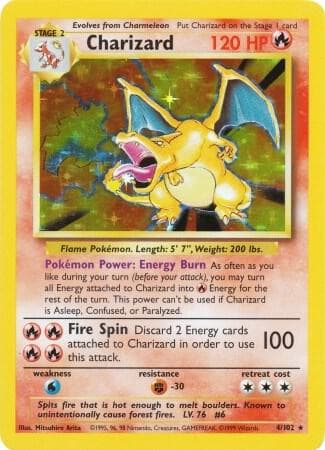 Base Set Charizard
Base Set (Unlimited), 4/102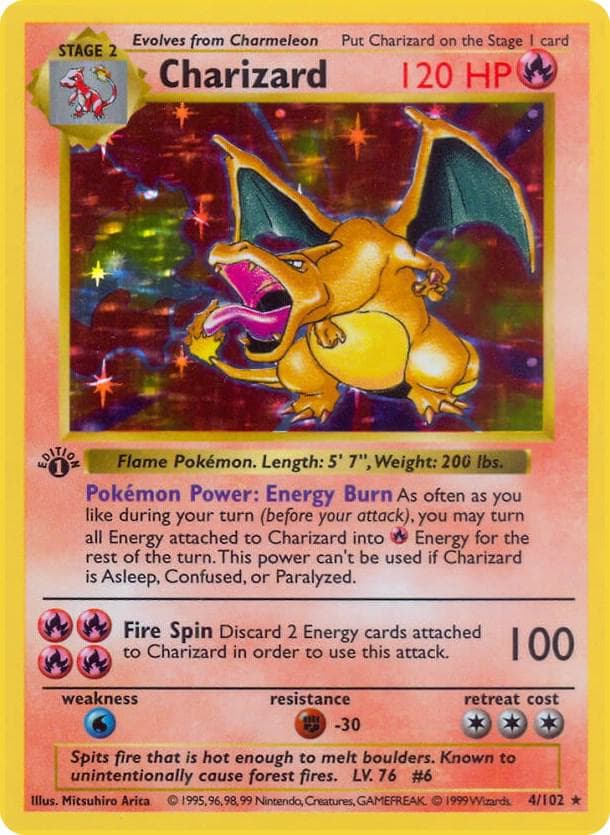 Shadowless Charizard
Base Set (Shadowless), 4/102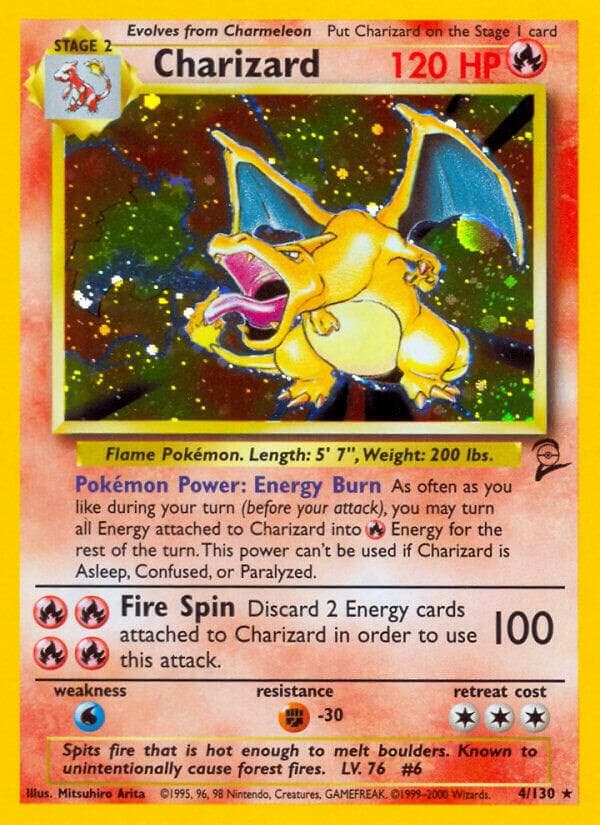 Base Set 2 Charizard
Base Set 2, 4/130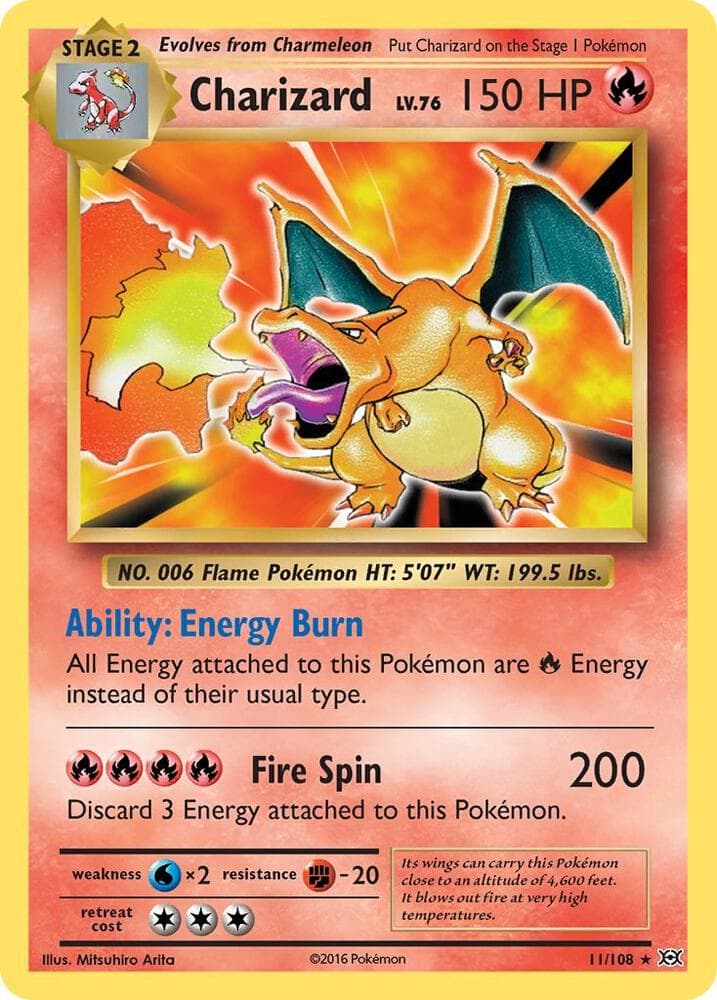 XY Evolutions Charizard
XY Evolutions, 11/108
The first two share a collector number and differ only in printing details, which is why step 3 exists. If yours is a Base Set Charizard, the Base Set printings guide shows how to tell Unlimited, Shadowless and 1st Edition apart from the card face.
What that reference figure actually is
- It is a market reference from recent sold data, not an offer to buy and not a guaranteed sale value. It is dated on the page, and it moves.
- It describes one stated condition. The page says which condition the figure is for. If your card is not in that condition, that figure is not your card's figure. Our condition guide covers how to judge that honestly before you decide.
- Asking prices are not sold prices. A listing at any figure proves only that someone asked for it. The reference is built from completed sales for that reason.
- Graded rows are conditional. A card page lists graded tiers only where there are enough recent graded sales for that exact printing; where there are not, no tier is shown rather than an invented one. The raw versus graded guide explains what a slab does and does not add.
Common ways this goes wrong
- Pricing the wrong printing. The most expensive mistake and the most common: reading a Shadowless or 1st Edition reference for an Unlimited card, or a 1999 reference for a 2026 anniversary reprint that keeps the original number. The number alone never settles it.
- Pricing the wrong language. An English reference does not describe a Japanese card.
- Assuming Near Mint. Most cards that have been handled are not, and the difference between conditions is usually larger than the difference between two similar printings.
- Treating a rare card as a valuable one. Rarity symbols describe pull odds within a set, not demand. Plenty of rares are worth less than some commons from older sets.
- Trusting a listing title. Sellers write "1st Edition" and "PSA 10 candidate" freely. Read the card, not the title.
Where to go from here
Once you have the right page, the reference on it is the honest starting point; how it was arrived at is in our methodology. For why one card can have several prices at all, the prices guide is the background. And if you are deciding whether to sell, hold or grade, remember that this site does not buy cards or guarantee any value — it tells you what comparable cards have recently sold for, and lets you decide.