How to Find a Pokemon Card's Set and Number
In this guide
Almost every Pokemon card prints a small number near one of its bottom corners. It is the quickest way to tell one card from another card with the same name — once you know which number to read.
Start here: four things to check
- Find the small number near a bottom corner of the card. It usually looks like 4/102 or 095/203.
- Check it isn't the Pokedex number. If the number sits near the Pokemon's height and weight rather than at the very bottom edge, it is a different number.
- Find the set symbol or set code near the collector number, or on older cards in the lower corner of the artwork.
- Note the card's name, and look all three up together.
These details help narrow down the catalogue match. They don't always settle which printing you have — the last section explains why.
Reading the number
Read 4/102 as collector number 4 within a printed numbering total of 102. The second figure is the numbering total printed on the card; it doesn't necessarily count every variant or extra card associated with a set.
Two numbers on one card
Many cards print more than one number, and it is worth knowing which is which. The Generations Charmander shows both at once. The bar under the artwork reads NO. 004: that is Charmander's National Pokedex number, not this card's collector number. The collector number for this card is at the bottom edge — RC3/RC32.
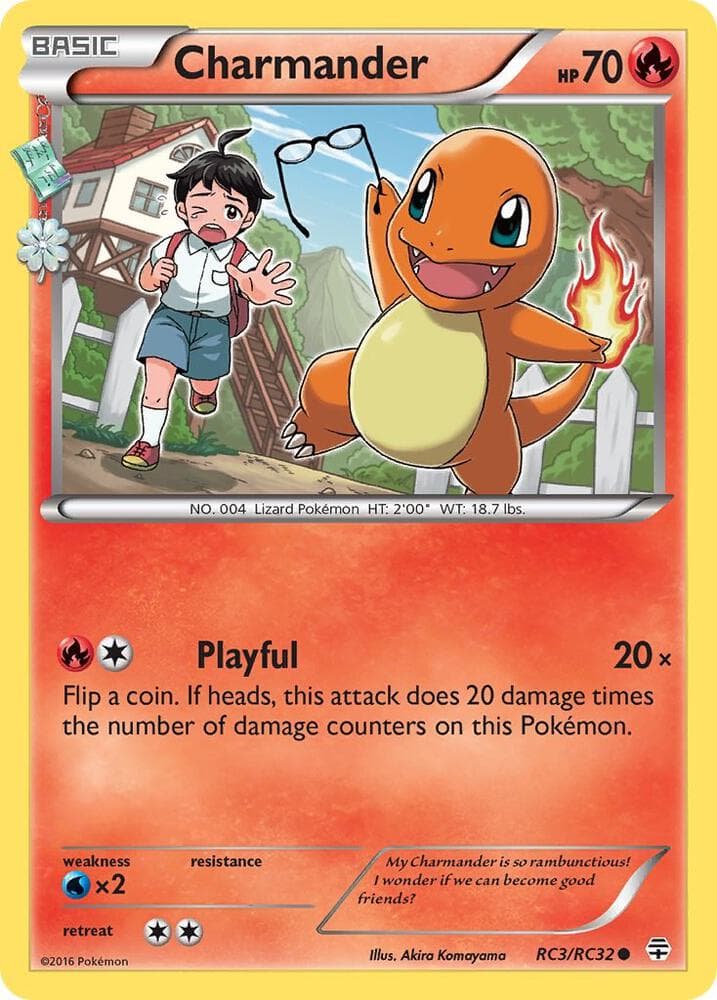
As a rule of thumb, a number sitting with the height and weight is the Pokedex number. The collector number sits at the bottom edge of the card.
When the first number is higher than the second
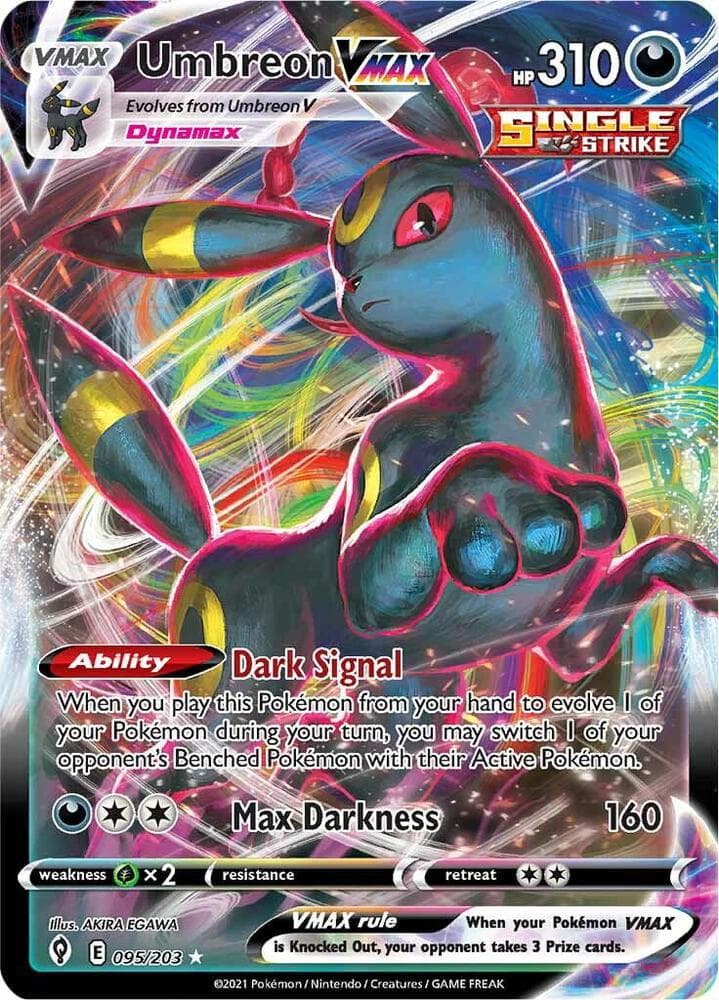
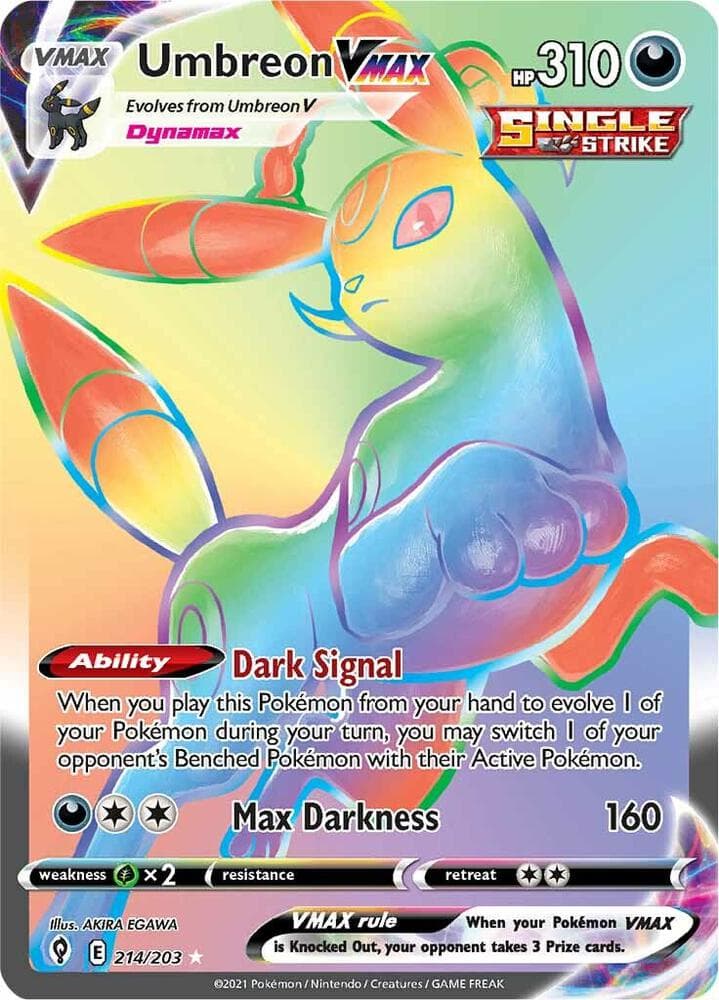
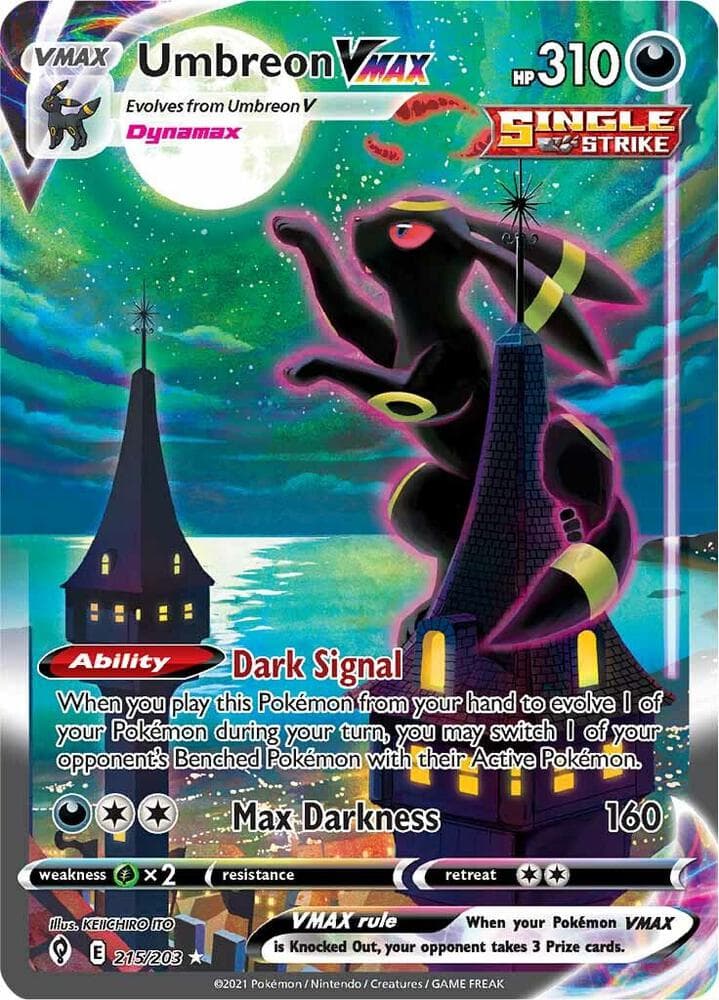
215/203 looks wrong, but it is a real collector number. Sets can include cards numbered beyond the printed numbering total, so a number higher than the total is not by itself a sign of a problem.
Umbreon VMAX from Evolving Skies is one verified example. It exists as 095/203, 214/203 and 215/203 — three separate cards, each with its own page. On these cards the collector number sits at the bottom left, beside the set symbol.
Leading zeros don't change the card
Your card may print 4/102 while catalogues — including ours — write it 004/102. Same card. Zero-padding is a filing convention that keeps numbers sorting in order.
Same name, different number
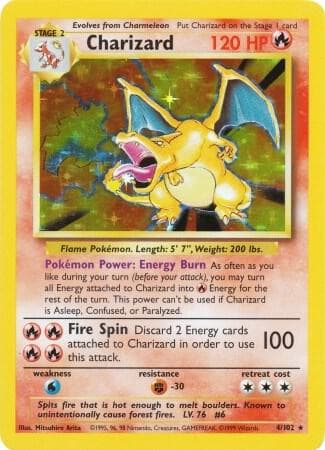
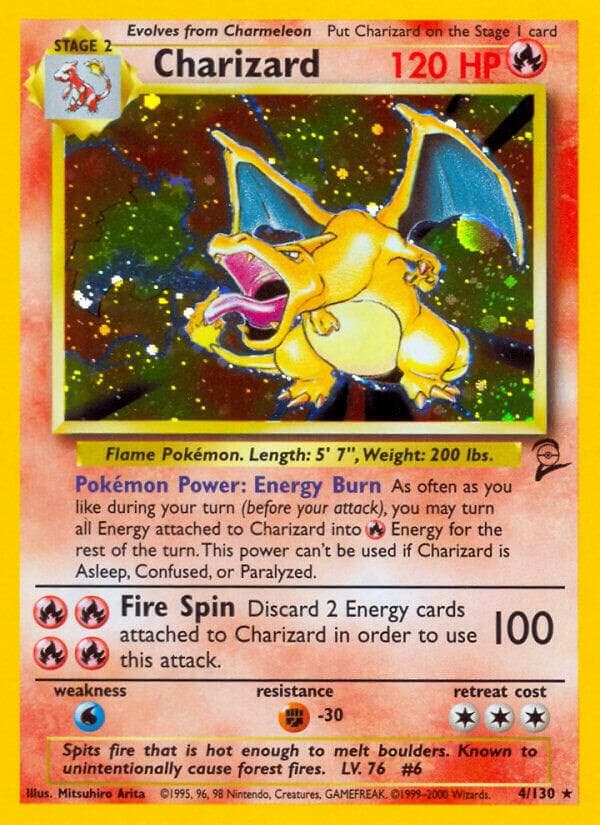
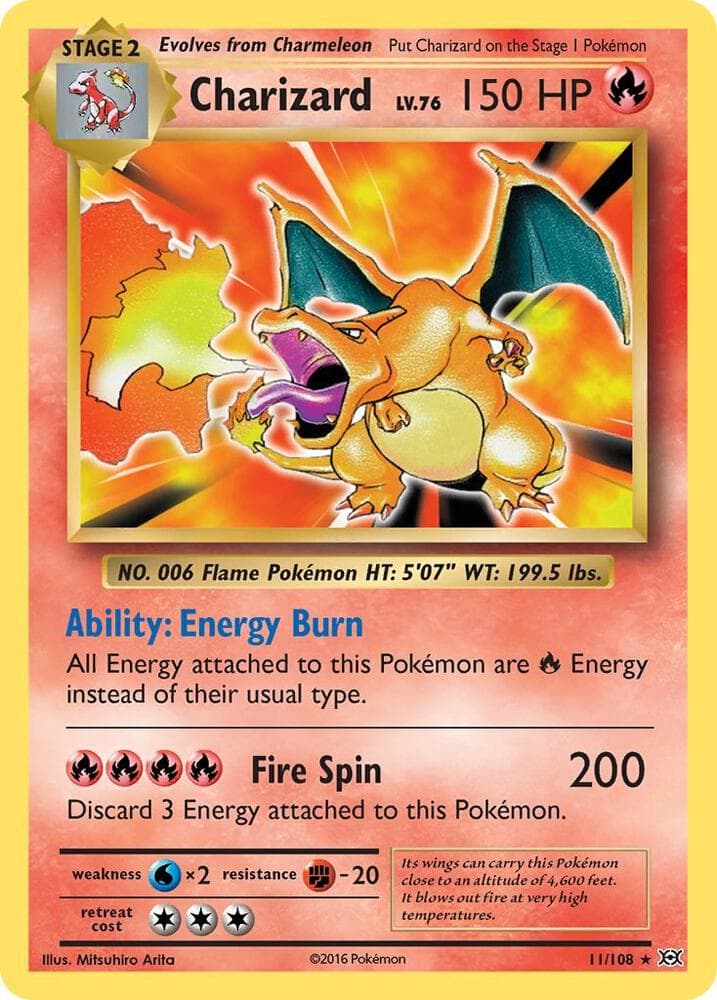
Three Charizards: Base Set 004/102, Base Set 2 004/130 and XY Evolutions 11/108. Same Pokemon, three different cards. The name alone can't separate them; the number and set can. On the Base Set card the collector number sits at the bottom right, under the attack text — the position has moved between eras, so check both bottom corners.
What the name, set and number still don't settle
Together they narrow down which card you are holding. They don't always finish the job, because different printings can share the same name, set and number.
- Foil treatment. Where a card exists as both a holo and a non-holo, or has a reverse-holo version, those printings can share a collector number. Not every product has every foil treatment, so which ones exist depends on the card and the set.
- Edition and print markings. Some releases carry stamps or markings that others of the same number don't.
- Language. The same card exists in other languages, and numbering can differ across language releases rather than matching the English card.
So when comparing your card against a price, match the printing as well as the number. For what to check on the card itself, see how to check a card's condition.
A matching set and number does not prove authenticity. Printed details can be copied, so identification and authentication are separate questions.