Which Vintage Pokemon Cards Are Worth Buying, and What a Fair Price Looks Like
Published 19 September 2026 · Last checked against the official sources 19 September 2026
In this guide
“Vintage” means the Wizards of the Coast era, roughly 1999 to 2003: Base Set through the e-Card sets. It is the part of the hobby where a printing detail can multiply a price several times over, so the buying order is printing first, condition second, reference third. This guide is about choosing well, not about which card will rise.
Printing first
- Base Set has three printings that look alike. Shadowless (no drop shadow on the art frame, thinner HP text), Unlimited (the common one), and 1st Edition (a stamp on the left of the art). The Base Set and Base Set (Shadowless) pages are separate for that reason, and this guide shows how to tell them apart from a photo.
- Base Set 2 is a reprint set, not Base Set. A Base Set 2 Charizard is a genuine WOTC card with its own, much lower, reference than the Base Set Charizard. Titles that say “Base Set” over a card with the Base Set 2 symbol are a classic mis-description.
- Holo, non-holo and reverse. Jungle, Fossil, Team Rocket, the Gym and Neo sets each have holofoil rares that carry the demand; a non-holo copy of the same Pokemon is a different card at a different reference.
- Later WOTC sets. Legendary Collection, Expedition, Aquapolis and Skyridge have reverse-holo and crystal-type cards that collectors seek specifically; check the number and the rarity symbol, not just the name.
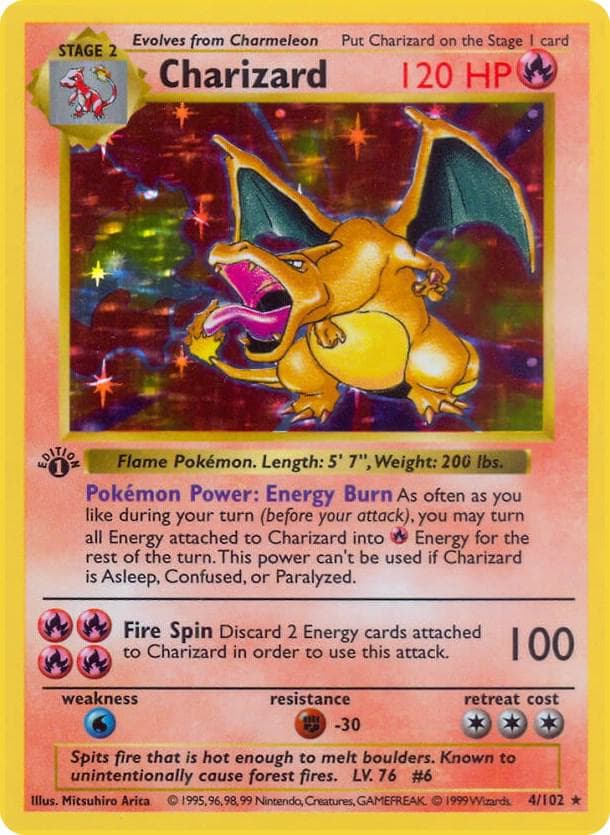 Shadowless Charizard
Base Set (Shadowless), 4/102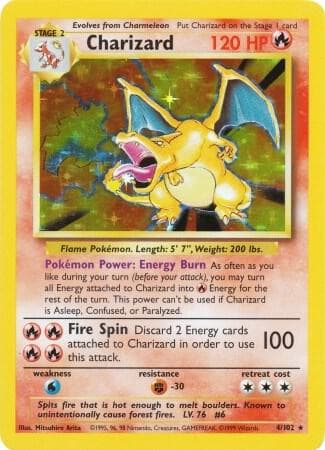 Base Set Charizard
Base Set (Unlimited), 4/102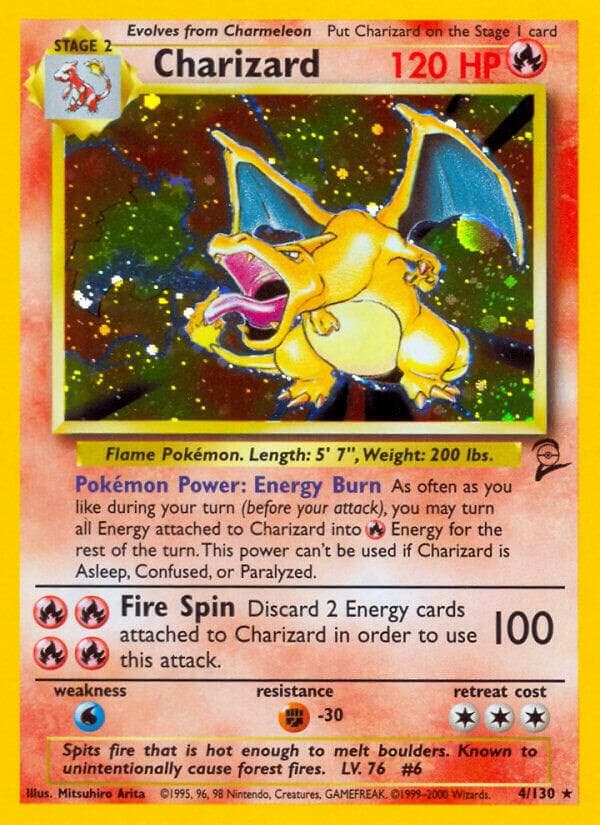 Base Set 2 Charizard
Base Set 2, 4/130
Condition second
Vintage cards were played with. A Near Mint claim on a 1999 card deserves front and back photos in good light; edge wear on the back border and print lines on holofoil are the common flaws. Grading changes the market: a slabbed 9 or 10 and a raw copy are priced from different references, and the site never compares one with the other. Use the condition checklist before you decide what tier you are paying for.
Reference third
A fair price is a delivered total at or below the recent sold reference for that exact printing and condition — not a forum figure, not a listing price. Each card page states its reference, the condition it is for and the date it was recorded, and lists any live listing below it. Start with the price checker for any card, or browse the era:
- Vintage deals — every tracked 1998–2003 listing currently shown, with the reference beside each.
- Popular starting points with their own pages: Arcanine (Base Set) for a holo rare that is still reachable, and the Base Set page's most valuable cards list for the top of the set.
The traps
- “Vintage” in a title. The word is not a printing. Some sellers apply it to any card older than a few years.
- Reprints presented as originals. Celebrations (2021) and XY Evolutions (2016) reprinted Base Set artwork with a modern set symbol and border; a genuine card, a different reference.
- Fakes. The most-faked cards are the vintage chase cards. The physical tells and the extra photos worth asking for are in spotting fake Pokemon cards in a listing.
- Auctions. A vintage auction's current bid is usually far under its final price. Compare the bid with the reference for information; do not treat it as a saving.
Buying rule of thumb: choose the printing, confirm it in the photos, price the condition the photos support, and pay at or under the reference. Everything else — era stories, future value, what a card “should” be worth — is opinion. Read vintage vs. modern for where the eras begin and end.