Vintage vs. Modern Pokemon Cards
In this guide
“Vintage” and “modern” aren't official categories, but collectors use them because the two ends of the Pokemon TCG's history behave differently as markets. Knowing roughly where a set sits helps you read its prices.
A rough timeline
- Vintage / WOTC era (1999–2003). Base Set through the sets published while Wizards of the Coast held the licence (ending around Base Set 2, Legendary Collection, and the e-Card sets). Smaller print runs, and the era of 1st Edition and Shadowless printings.
- Middle era (2003–2016). The EX, Diamond & Pearl, Platinum, HeartGold & SoulSilver, Black & White, and XY blocks, after The Pokemon Company took the licence back. Large print runs; a long stretch that's only recently drawn sustained collector attention.
- Modern (2017–present). Sun & Moon onward, including the Sword & Shield and Scarlet & Violet blocks. Very large, months-long print runs, and the era of alternate-art and “special illustration” chase cards.
You can browse by set on the sets page, and the priciest cards with active listings on most expensive cards.
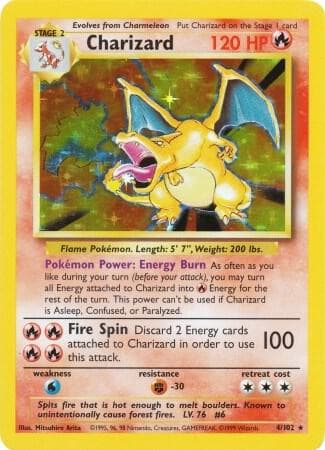 Base Set Charizard
1999 - Base Set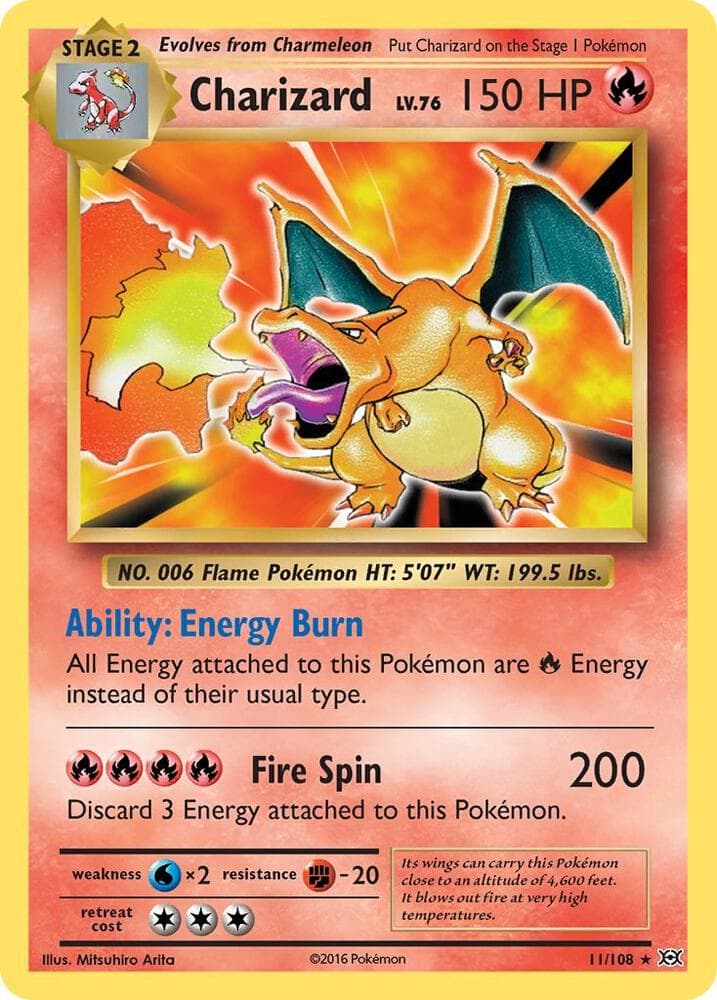 XY Evolutions Charizard
2016 - XY Evolutions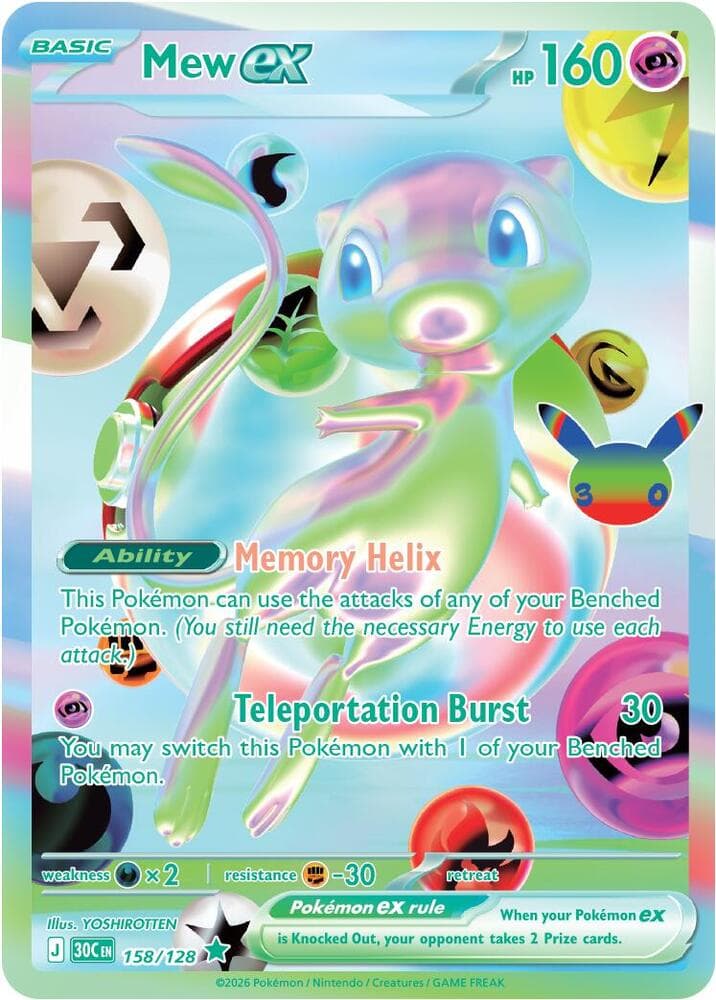 Mew ex #158/128
2026 - 30th Celebration
What drives value in vintage
- Fixed, smaller supply. No more original-run copies are being made, and decades of play, damage, and loss have thinned the pool — especially in high grade.
- Edition and stamp. For WOTC-era cards, 1st Edition (a stamp on the lower left of the art) and Shadowless (no drop-shadow on the art box, early Base Set only) command strong premiums over standard Unlimited copies of the same card. That is why Base Set (Shadowless) is listed as its own set here, and why Shadowless Charizard has a separate page and price from the standard one.
- Nostalgia and iconography. Base Set Charizard is the obvious example — demand is cultural, not driven by playability. Later remakes don't replace it: XY Evolutions Charizard (2016) is a different card with its own market.
- Condition sensitivity. Centering and print defects were common, and survivors are often worn, so the price gap between grades is steep.
What drives value in modern
- Rarity tier, not just the Pokemon. Within a modern set, the gap between a regular holo and the alternate-art or secret-rare version of the same card is enormous. The Evolving Skies card list shows it: the same Pokemon appears at several rarity tiers, each priced separately.
- Sealed product. Modern singles compete with the fact that sealed booster product is still on shelves; prices for many singles stay soft until the set stops being printed. Sealed boxes of out-of-print sets become collectible in their own right — see the sealed deals page.
- Print-run timing. A card from a short-printed set or a set with a famously low pull rate can hold value; a card from a heavily printed set often doesn't.
Buying risks by era
- Vintage: counterfeits are common and have improved. Buy high-value vintage raw only from clear photos you can assess, or buy it graded. Watch for trimmed or restored cards.
- Modern: the main risk is overpaying near a set's release, when hype is high and supply is still increasing. Prices for most modern cards drift down for a while after release.
- Both: “proxy”, “custom”, and “fan art” listings are not the real card. This site filters those out, but always confirm from the photos.