Pokemon Booster Box Prices: What MSRP Means, Why Resale Differs, and How to Check a Sealed Listing
Published 19 September 2026 · Last checked against the official sources 19 September 2026
In this guide
A booster box is a factory-sealed case of booster packs — 36 packs for most English expansions. Its retail price is set from the pack's recommended price, and its resale price on eBay is set by demand for the expansion, how long it has been out of print, and whether the box is genuinely sealed. This guide explains those three things so a sealed listing can be read the same way a single card can. It does not list prices: they change weekly, and a table here would be stale before it was read.
What MSRP means for a box
- It is the pack price multiplied up. The Pokemon Company sets a recommended price per booster pack; a box's recommended price is that figure times the pack count. Retailers may sell above or below it.
- Products differ in pack count. A booster box (36 packs), a booster bundle (6 packs), an Elite Trainer Box (9 packs plus accessories) and a sleeved booster (1 pack) are priced per pack very differently once the accessories and the packaging are counted. Compare like with like.
- Regional pricing is not a conversion. UK, EU, Australian and Canadian recommended prices are set separately, so a box can be cheaper delivered from one marketplace than another. Our marketplace filters exist for that reason.
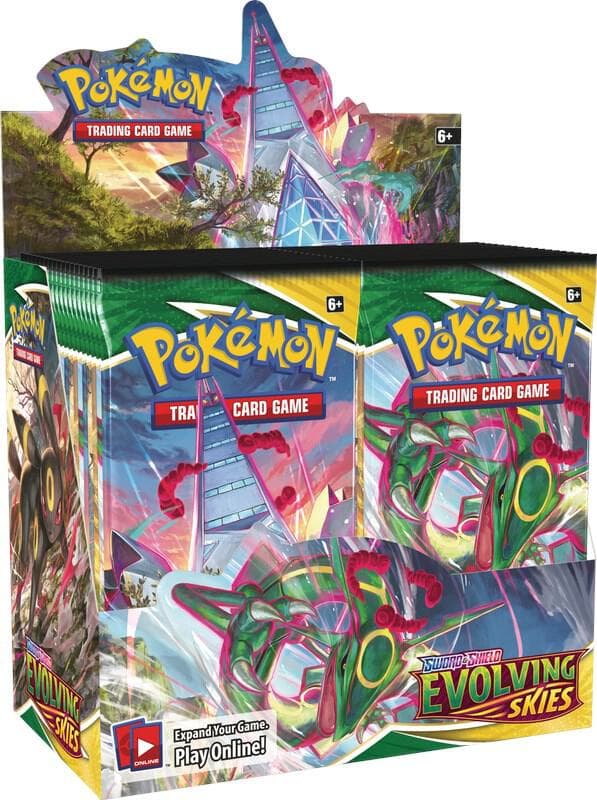 Evolving Skies Booster Box
Booster box: 36 packs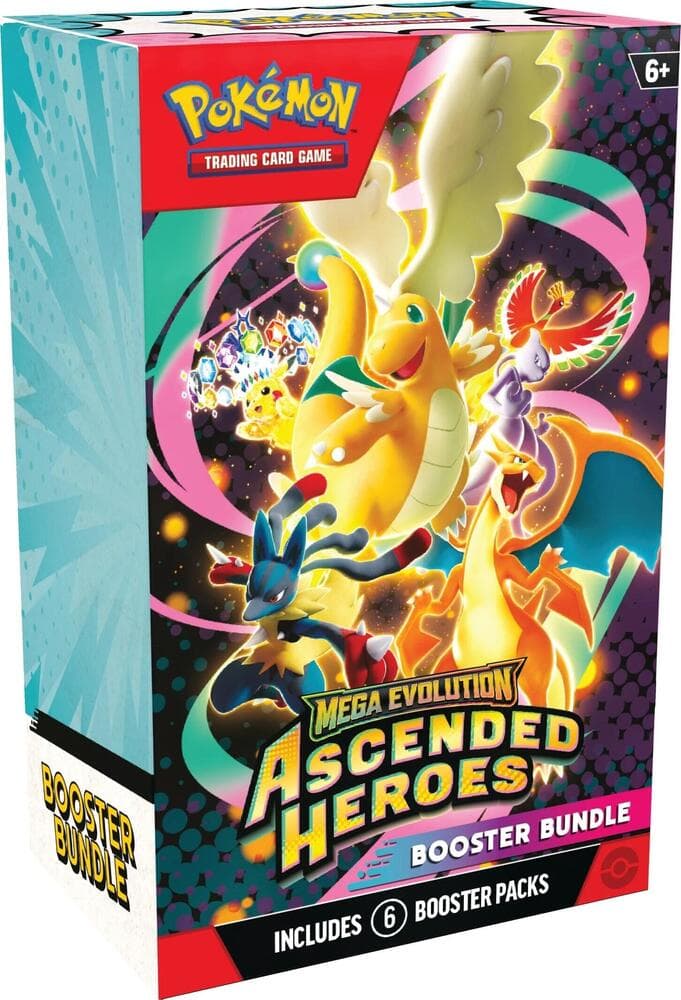 Ascended Heroes Booster Bundle
Booster bundle: 6 packs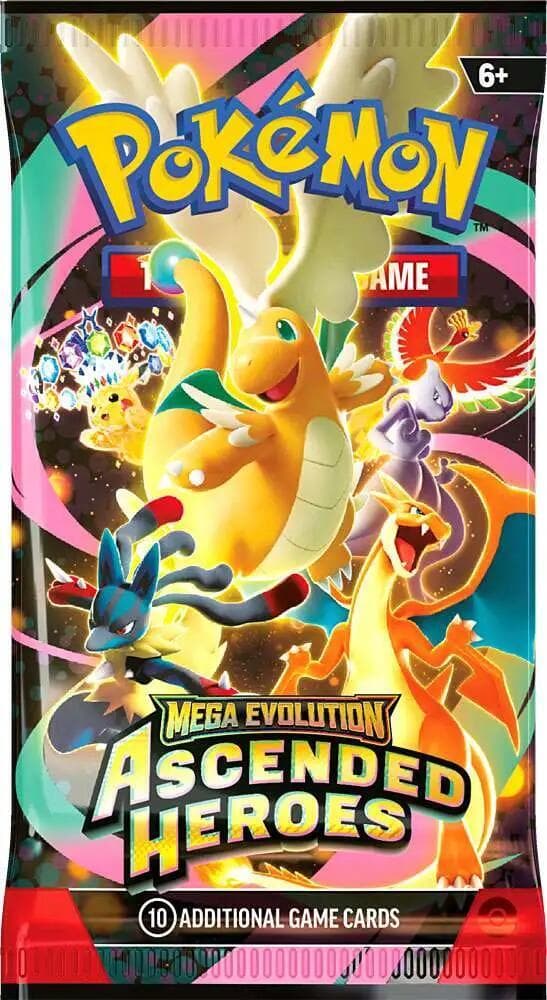 Ascended Heroes Booster Pack
Single booster pack
Why resale differs from retail
- In print vs. out of print. While an expansion is being printed, boxes trade near retail because supply is replenished. Once printing stops, the price is set by whoever still holds sealed stock.
- Chase cards. An expansion whose top cards are in high demand pulls its sealed price up, because a box is a chance at those cards.
- Print run size. Modern expansions are printed for months in very large quantities; a few short-printed products (some special sets and older expansions) are not, and their sealed prices reflect that scarcity.
- Allocation and hype. At launch, a product that is hard to find in shops can resell well above retail for a few weeks and then fall back once stock arrives. A price seen in launch week is not the product's price.
What “sealed” has to mean
The value of a box is the guarantee that nobody has opened it. Read for:
- Factory shrink-wrap with the manufacturer's seal, shown in the listing's own photos. A box “re-sealed” or with generic plastic wrap has lost the guarantee, whatever the title says.
- Pack count and configuration stated, and matching the product. A “booster box” of a different pack count is a different product.
- Weighed packs. Loose packs and opened boxes can have had heavier packs removed. This is one reason a sealed box and the same number of loose packs are not the same purchase.
- Language and region printed on the box; a Japanese box is a different product with a different price.
What a photograph of a seal can and cannot tell you
Ask for images of every face of the box, taken by the seller rather than lifted from a product page. What those images can support is limited, and it is worth being precise about the limit: a photograph can show you that a seal is present, that it is intact in the frame shown, and whether the packaging is damaged. It cannot establish that the wrap is the original factory wrap, and it cannot establish what is inside.
- Stock photography is a stop sign on sealed product. If the images are the manufacturer's, you have seen a product, not the item.
- Look at the wrap as an object — how it folds at the corners, whether it is taut, whether seams sit where they sit on the other faces. You are looking for inconsistency between faces, not for a specific tell.
- Weight and dimensions are checkable facts a seller can state. A refusal to state them is informative.
- Nothing here is authentication. A resealed box can photograph well. Buy on the seller's protections and returns as much as on the pictures, and see buying safely.
Check you are comparing the same product
Before comparing two prices, confirm they are for the same product. Sets routinely ship a standard edition alongside retailer-exclusive and Pokemon Center editions, and those are separate products with separate contents. Our sealed catalogue holds three different Elite Trainer Boxes for Prismatic Evolutions alone. Match the full product name in the title, and check it against the photograph of the box — the format comparison has the detail.
How to check a sealed listing before you pay
- Photos of the seal, all six sides, in the seller's own images.
- The exact product name, matched against the box in the photograph.
- The listing's delivered total, including shipping — boxes are heavier than cards.
- Returns policy and the seller's recent feedback on sealed product specifically.
- Whether the price is below a reference for that exact product. Our sealed pages compare a listing against a sealed market reference for the same product when one exists, and show nothing green when it does not: sealed product listings.
Singles or sealed?
If you want particular cards, buying the singles is almost always cheaper than opening boxes to find them. If you want the sealed product itself — to keep, or to open for the experience — then the questions above are the ones that matter. For the card side of the decision, read how Pokemon card prices are determined and the eBay buyer's checklist.